The Biden Approval Ratings Project

Featured

Joe Biden became President on January 20th, you may have noticed. Organizations often ask Americans whether they approve of the incumbent President. These polls are published in separate places and are more useful when they are put together in one place and averaged.

Well, I am introducing the Biden Approval Ratings Project. An open source polling average for Joe Biden’s approval ratings. I did some work in the past with polling averages in Excel for smaller-scale use, but now I think I can justify making this a regularly updated feature as a Python programmed product. There are still many issues with it, I have to manually do data entry to update it because of one Nathaniel Argent not doing the hard work of poll aggregation for me yet, and I could see an issue with the way I throw out older polls from the same pollster if two repeat pollsters publish on the same day (though I think there are not-too-bad ways to fix this).

As I write this: Biden’s approval rating stands at 55.2%, and I think that might go up as more high quality pollsters enter the fray. I will be writing proper documentation for it and hopefully making the program a bit more automated over time.

Thursday: Raising the minimum wage.

The Biden Confirmation Hearings: Alejandro Mayorkas

Second up in the Biden cabinet confirmation hearings is the DHS Secretary nominee, Alejandro Mayorkas, who unlike Yellen has actual partisan controversy surrounding him.

https://static.politico.com/dims4/default/f1429db/2147483647/resize/1920x/quality/90/?url=https%3A%2F%2Fstatic.politico.com%2F7a%2F14%2F65b0272b48e791b59084ced10511%2F210119-mayorkas-ap-773.jpg

During Mayorkas’ tenure as Deputy DHS Secretary, there was a report on potential favoritism in giving green cards to employees to companies with political connections to Harry Reid, Terry MacAuliffe, and in a bit of the story that sounds made up by a House Republican, Hillary Clinton’s brother. The Republican Chairman, Rob Portman, was intent on bringing this up at every possible opportunity, to which Mayorkas responded that he tried to expedite the green card process for everybody, not just the politically connected people. Ron Johnson attempted to make a very dumb rhetorical trap about the “children in cages” facility in Texas being first constructed under Obama’s DHS. Everybody else more or less asked policy questions in an area that I’m not too informed in, with the exception of immigration, which I do know a decent bit about. Frankly my opinions on immigration are so much more liberal than the range of acceptable discourse in the US that any move in a less restrictionist direction is good, and therefore I support a Democrat running that department over a Republican. The border wall is largely a symbolic waste of money and it’s good that Biden plans on halting funding for it, and I hope in addition to providing a path to citizenship, he can work under the Biden administration to make it much easier to legally immigrate to the US. That will certainly require the help of Congress, but hey, that’s what a governing trifecta is for.

Anyway, I have very little to add on the actual homeland security parts of DHS, read an actual professional for that. But I feel for the sake of completionism it’s worth going through every one of these hearings.

Next week: I won’t be back with an article for a few days, but I’m working on something to introduce after those few days are up.

The Biden Confirmation Hearings: Janet Yellen

Today, the Senate hearings started for President-elect (this will be the last article in which I call him that) Joe Biden’s cabinet nominees. The nominated Secretaries of State, Defense, and Treasury (plus other roles that aren’t in the big four) were all up in front of committees to be grilled today, and it’s worth talking about them. Let’s start with the one most important to the issues I care about, Secretary of the Treasury nominee Janet Yellen.

Janet Yellen was the Chair of the Council of Economic Advisers for a time under Bill Clinton, the President of the San Francisco Fed before and during the Great Recession, sounding alarms about the housing situation before it became as bad as it did, Vice Chair of the Federal Reserve for four years during the second half of Ben Bernanke’s tenure as Chair, and finally Chair of the Fed from 2014-2018. She’s generally described as fairly dovish, but she did oversee the first interest rate rises after the Great Recession during her tenure. Her confirmation hearing proceeded as follows:

  • Chuck Grassley and Ron Wyden gave some very long and rambling opening statements, followed by an opening statement by Yellen.
  • Yellen answered questions from various Senators, the most interesting of which follow.
  • Several people asked her about the national debt, her view is more or less the standard center-left view right now that interest rates are so low that the federal government shouldn’t worry too much about the debt right now. She was asked at what point she would urge focus onto the debt again, and she simply said when interest rates start to go up, this didn’t leave the Republicans satisfied, but it got the point across that the Biden administration isn’t interested in taking the foot off the gas.
  • She was also asked by Republicans on the minimum wage hike, and she referred obliquely to the famous David Card and Alan Krueger paper about the minimum wage increase in New Jersey from a minimum that was the same between NJ and PA, comparing Philly suburbs across state lines, and the effect on employment in New Jersey was actually positive.
  • She was pressed both ways on free trade by Democratic Senators during the hearing, and came off as surprisingly non-committal, I’d be interested in seeing how her tenure evolves on this issue (with the understanding that the Treasury Secretary often has little to do with trade).
  • Potential tax hikes during the Biden administration were a frequent question, and she more or less stuck to the administration line of “we’ll get out of the recession first then we’ll talk”.

Anyway, I wanted to get something out today (20 minutes under the wire), but I’m short on time so apologies if this is a little short.

Tomorrow: Inauguration day. I probably won’t write anything because there’s a lot of shit to take in that might be a little too much to give a quick take on. So expect something new to be more likely to appear on Thursday than tomorrow.

Welcome to the Beginning of the Biden Presidency

Over the coming days, Joe Biden will be inaugurated as the 46th President of the United States, Alex Padilla, Raphael Warnock, and Jon Ossoff will be sworn in as United States Senators to make Chuck Schumer majority leader for the first time in his career, allowing him to let Biden’s cabinet nominees through, and the United States House of Representatives will begin work on liberal legislation that has a real chance of becoming law. For the first time since 2010, there is unified Democratic control of the United States federal government, and boy does it feel needed.

What’s on Biden’s plate

Joe Biden will enter the Presidency with the opportunity to write a lot of executive orders reversing Trump administration policies on day 1, especially on the issue of immigration where executive action formed nearly all of Trump’s (eventually successful thanks to being able to use COVID as a scapegoat) plan to slow legal immigration to the United States down to a negligible trickle. Trump also spent a lot of executive actions on deregulating the financial sector and polluting manufacturing sectors, Biden will reverse that on day 1. In addition, Biden’s team has been reportedly finding some inefficiencies in the way the US is administrating vaccine doses, which should be fairly easily fixable. In my start of year predictions post I gave a 70% chance Biden wouldn’t be able to deliver on the “100M vaccines in 100 days” promise, now it seems if anything too modest a target, and I get to be very happy that I look like an idiot in this specific case. Things are looking very good going into these first 100 days, and I’m excited.

What’s on Congress’ plate

The House has a fairly open week or so ahead of it after the inauguration, they can start genuinely working on legislation. The Senate is much more constrained, they’re going to have to figure out how to balance a 50-50 chamber with a ton of committee hearings on Biden nominees starting tomorrow and, yeah, that whole impeachment thing. It’s going to be a bit of a mess, but thankfully I feel like it’s actually worth writing about the executive branch now, so there shouldn’t be much of a dull moment ahead. We can talk about $15/hour minimum wages, COVID recovery bills, filibuster removal, DC statehood, H.R. 1, and other things that come up, this is really when this new blog push gets exciting.

Tomorrow: Let’s dissect some of those hearings from tomorrow.

On the Merits: H. Res. 24, Impeaching Donald John Trump, President of the United States, for high crimes and misdemeanors.

I said I was gonna talk about impeachment on its own terms, disassociated from political calculations, and I figured I could parlay this into the start of a series where I do this for other major bills and resolutions being considered by Congress. Hopefully most of these have less political sexiness than impeaching the President, but I’m writing a blog about Congress and Congress is only considering one thing right now. Welcome to On the Merits, a series on bills and resolutions on their own terms, away from the political calculations that I usually frame most American government actions as (“how will this help Democrats win elections” is something I ask more in my writings here than “is this good”). Let’s read closely through the five pages impeaching Donald Trump.

Fundamentally, it’s important to realize that impeachment is a ruling determined by political rules of what constitutes an overstep according to Congress, not an actual criminal conviction standard, it’s more useful to think of this as a vote of no confidence than a criminal indictment. I am not going to quote the boilerplate at the beginning, but once the article of impeachment actually begins I will go paragraph by paragraph:

The Constitution provides that the House of Representatives “shall have the sole Power of Impeachment” and that the President “shall be removed from Office on Impeachment for, and Conviction of, Treason, Bribery, or other high Crimes and Misdemeanors”. Further, section 3 of the 14th Amendment to the Constitution prohibits any person who has “engaged in insurrection or rebellion against” the United States from “hold[ing] any office … under the United States”. In his conduct while President of the United States—and in violation of his constitutional oath faithfully to execute the office of President of the United States and, to the best of his ability, preserve, protect, and defend the Constitution of the United States, and in violation of his constitutional duty to take care that the laws be faithfully executed—Donald John Trump engaged in high Crimes and Misdemeanors by inciting violence against the Government of the United States, in that:

This sets up the premise for this impeachment, “other high Crimes and Misdemeanors” has been interpreted differently every time an impeachment has come up, but in practice it means “Congress thinks you went too far”. Frankly if you read out the standard oath of office for federal officeholders in America “I will support and defend the Constitution of the United States against all enemies, foreign and domestic” the specific Presidential oath just mentions “protect the Constitution” but the “foreign and domestic” is still implied, this is something Trump failed to do. There was a mob of people last Wednesday swarming the American federal legislature, and Trump more or less encouraged them instead of making any attempt to protect the constitutionally prescribed function of Congress in counting the Electoral College votes.

On January 6, 2021, pursuant to the 12th Amendment to the Constitution of the United States, the Vice President of the United States, the House of Representatives, and the Senate met at the United States Capitol for a Joint Session of Congress to count the votes of the Electoral College. In the months preceding the Joint Session, President Trump repeatedly issued false statements asserting that the Presidential election results were the product of widespread fraud and should not be accepted by the American people or certified by State or Federal officials. Shortly before the Joint Session commenced, President Trump, addressed a crowd at the Ellipse in Washington, DC. There, he reiterated false claims that “we won this election, and we won it by a landslide”. He also willfully made statements that, in context, encouraged—and foreseeably resulted in—lawless action at the Capitol, such as: “if you don’t fight like hell you’re not going to have a country anymore”. Thus incited by President Trump, members of the crowd he had addressed, in an attempt to, among other objectives, interfere with the Joint Session’s solemn constitutional duty to certify the results of the 2020 Presidential election, unlawfully breached and vandalized the Capitol, injured and killed law enforcement personnel, menaced Members of Congress, the Vice President, and Congressional personnel, and engaged in other violent, deadly, destructive, and seditious acts.

The “pursuant to the 12th Amendment” gets at what I was attempting to get at in the previous paragraph, this is quite literally something in the constitution President Trump didn’t defend. Trump did in fact issue plenty of statements on his Twitter insinuating that the election was stolen over the past few months, tweets that I would link to, IF HE HAD THEM. Trump’s campaign and allies had a direct slogan entitled “Stop the Steal” ‘lest you think Democrats are putting words in their mouths. In addition to the aforementioned quotes Trump gave, his lawyer, Rudy Giuliani, claimed that there needed to be “trial by combat” in DC on the 6th. The impeachment resolution is correct, I’m not sure that impeaching Trump is actually the best idea (though I think doing it and then the Senate sitting on it for a while is probably the best move) from a political perspective, but it is clearly correct on the merits to anybody who is looking at the actual words Trump is saying.

President Trump’s conduct on January 6, 2021, followed his prior efforts to subvert and obstruct the certification of the results of the 2020 Presidential election. Those prior efforts included a phone call on January 2, 2021, during which President Trump urged the secretary of state of Georgia, Brad Raffensperger, to “find” enough votes to overturn the Georgia Presidential election results and threatened Secretary Raffensperger if he failed to do so.

This is of course referring to the “can you find 11,780 votes” phone call that would’ve probably been the scandalous news story du jour had the events of the 6th not happened. This one is so hilariously bad that I can’t really add on. From there the impeachment document concludes.

In all this, President Trump gravely endangered the security of the United States and its institutions of Government. He threatened the integrity of the democratic system, interfered with the peaceful transition of power, and imperiled a coequal branch of Government. He thereby betrayed his trust as President, to the manifest injury of the people of the United States.

Wherefore, Donald John Trump, by such conduct, has demonstrated that he will remain a threat to national security, democracy, and the Constitution if allowed to remain in office, and has acted in a manner grossly incompatible with self-governance and the rule of law. Donald John Trump thus warrants impeachment and trial, removal from office, and disqualification to hold and enjoy any office of honor, trust, or profit under the United States.

And that’s it, I don’t have much to add here, but I really want to emphasize the reason that I’ve seemed conflicted about impeachment of Donald Trump is because of political priorities and how Dems might maximize their chances of winning. On the merits, Donald Trump is a particularly bad President who should not be allowed to pull this sort of thing and it’s good that he’s facing serious political consequences, not least of which is, you know, losing reelection.

Tomorrow: I don’t know yet, Congress is done for a while, I’ll go and find something else interesting to write about.

Lloyd Austin and the Mixing of Political Valences

Obviously the main story of today is 25th amendment and impeachment things, but if given the opportunity to zig while most media is zagging I will take it, so let’s talk for a moment about Biden’s Secretary of Defense nominee: Lloyd Austin. This isn’t going to be some long article going into Austin’s qualifications and ways of thinking about the world and come to complex conclusions based on that. I don’t know the first thing about foreign policy, what I do know about is American political economy, and I want to look at a narrow part of this candidacy from that perspective.

Secretary of Defense nominees are required to have at least seven years of distance between them and their last job in the military if they happen to have worked in it. Congress can agree to waive this requirement, as it did for James Mattis in 2017, and it will have to do so for Lloyd Austin this year should he be confirmed as Biden’s Defense Secretary. This raises some interesting conundrums on the partisan valence of this issue that I think are worth considering. Democrats, as the generally less interventionist party on foreign affairs, have the natural instinct to be less willing to allow military personnel into the civilian chain of command. However, this is the nomination of a Democratic President that they would want to support. It leaves Democrats, and Republicans for the opposite reasons, in a bit of a pickle. Senators Tammy Duckworth and Elizabeth Warren, despite being obvious supporters of Biden’s agenda, announced they aren’t voting for the waiver. There was a committee hearing about it today, and I’d urge people to listen back to some of that, it’s a very interesting discussion that also shows how the Senate works at its best because of how it muddles partisan lines. Just a short article today, but I might follow back up on this when the waiver itself is up for a vote.

Tomorrow: A genuine look at the cases for and against impeachment, and an explanation on why I’m conflicted.

How Do You Impeach a President in 10 Days Anyway?

A few days ago, there was an attack on the United States Capitol from protestors/rioters/domestic terrorists cheered on by President Donald Trump during the counting of the electoral votes that afternoon. In response, the widespread call from Congressional Democrats has been to impeach the President. And I think that response, at least based on Pelosi’s tone in this presser was a decision made at the time, motivated as much by sheer anger at their lives being put at risk by this stunt than any complex political calculations. Even Joe Manchin, a shrewd political operate who has managed to stay alive in literally West Virginia as a Democrat, has said that he wants Trump’s head to roll.

How, then, will this actually work? The House will meet on Monday for a pro forma session, it will not actually end up being all that pro forma. House Democrats will try to pass a 25th amendment resolution through unanimous consent, obviously it won’t get that. That would open them up to try to pass it, maybe on Tuesday or later that day, but it wouldn’t work when it needs a two thirds vote in the House to go through. And then on Tuesday or Wednesday they can formally vote on impeachment, it’s a tight window, and a trial wouldn’t even start until after Biden’s inauguration. And from my understanding it takes a second vote after the conviction to do the particularly important thing, removal from future office.

The argument for this then is to keep media attention on Trump for as long as possible during Biden’s first two years, to perhaps play an Uno reverse card on the usual midterm backlash thing, but I do worry if this wasn’t thought enough about before going in.

Tuesday: A recap of action on Monday. There hasn’t really been much going on this weekend to talk about after what happened Wednesday. In future I might restrict weekends to having one special post just talking about more meta stuff, like the Hickenlooper article.

The New Senators of the 117th Congress, Part 1: John Hickenlooper

Back in the summer, I wrote an article discussing some ideological priorities of mine and made an attempt to ideologically categorize every sitting Senator on a four point scale based on how many of three ideological priorities of mine they met. At the end of that post, I specifically went out of my way to give a shout out to John Hickenlooper, my favorite of the also-rans in the 2020 Democratic primary, and a very likely to be victorious candidate for the Senate from Colorado. Lo and behold, polls were more or less spot on in Colorado and Hickenlooper easily came out the winner. Whenever there’s little actual Congressional action going on (though the last two days haven’t exactly been slow news days on any front that isn’t this narrow) I’ll try to use more zoomed out articles to help fill time. And on weekends in general this is more likely because Congress doesn’t tend to meet on them. Without further ado, this is part one in a number dependent on how many appointments and special elections there are part series on the new Senators of the 117th Congress, first up: John Hickenlooper (D-CO).

The Background

John Hickenlooper worked in private industry for a long time before becoming a politician. First as a geologist for an oil company and later as the co-owner of a brewpub company in Denver. It wasn’t until he was in his 50s that he became the mayor of Denver, a role he was successful in, before becoming the two term governor of Colorado despite his elections being in 2010 and 2014, the two best election years for Republicans in the 21st century. As governor of Colorado he governed as a pro-business moderate, but he still did the big important things Dems needed to do at that point, expanding Medicaid, fighting against the austerity commonly sought by Republicans in response to the Great Recession (a notably harder needle to thread at the state level than the federal level, where every budget dollar really matters) spending money on infrastructure in the state, moderate gun control measures that don’t risk as much alienation as it would in other states because of Colorado’s shift towards Democrats specifically because of their cultural liberalism. In general, the VA Dems and CO Dems are the models of what I like, because they’ve been able to shamelessly shape their politics towards the college educated, moderate on economics and liberal on cultural issues, and because of how college educated their states are, they can get away with it without paying a political price. This is the movement John Hickenlooper finds himself a politician from, supporting carbon taxes and immigration increasing while also standing firmly in favor of free trade, this is a liberal in the truest sense who welcomes the open society, and in the two states in America where that is the most politically viable option for Democrats, he can thrive.

In 2019 John Hickenlooper launched a bid for President that I imagine would have been more successful at some point in the past with a less crowded Democratic field and the increasing nationalization of American politics making it so that Senators are now preferred Presidential candidates compared to Governors. Either way he was clearly an also-ran from the start, but on the off-chance that he was silly enough to make it to any actual election, I would have endorsed him. After he dropped out of the Presidential race, Hickenlooper got started working on where he was more needed, to get to the Senate.

The Election

I’m frankly not going to spend too much time on this because the story of how Hickenlooper won is pretty boring, he’s very popular in Colorado and Biden had huge coattails in the state. He was the clear favorite to win the moment he stepped into the race, and the results show. He defeated former moderate Colorado Speaker of the House turned cosplayer-as-progressive-firebrand Andrew Romanoff (who couldn’t even muscle out the Bernie endorsement) by 17 points. Hickenlooper went into the election against unpopular incumbent Republican Senator Cory Gardner, who despite being a blue state Republican never tried to sell himself as any kind of Reasonable Moderate like a Susan Collins, up about 9 points in the polls, and he in fact won by 9 points. Interestingly a slight underperformance of Biden, a bit surprising given Hickenlooper’s local popularity and moderation, but I think it might have to do with just how toxic the Trump brand is to college educated people, who as mentioned, are the voters who shift power in Colorado. The man now has six years ahead of him to do what he wants in the Senate.

The Tenure

These sections will get bigger in later articles in the series as we actually have voting records to look at. There have been a grand total of two roll call votes in the Senate so far, and they were on overturning the election, something all but the most extreme Republicans in the Senate voted for. He posted an op-ed saying Trump should be removed, but the man doesn’t even have committee assignments yet. I will post a follow up article at a later date once we get a clearer read on how he plans to spend his six years in Washington.

Tomorrow: How do you impeach the President in 11 days anyway?

What Do Congressional Democrats Want to Do with Power, Anyway?

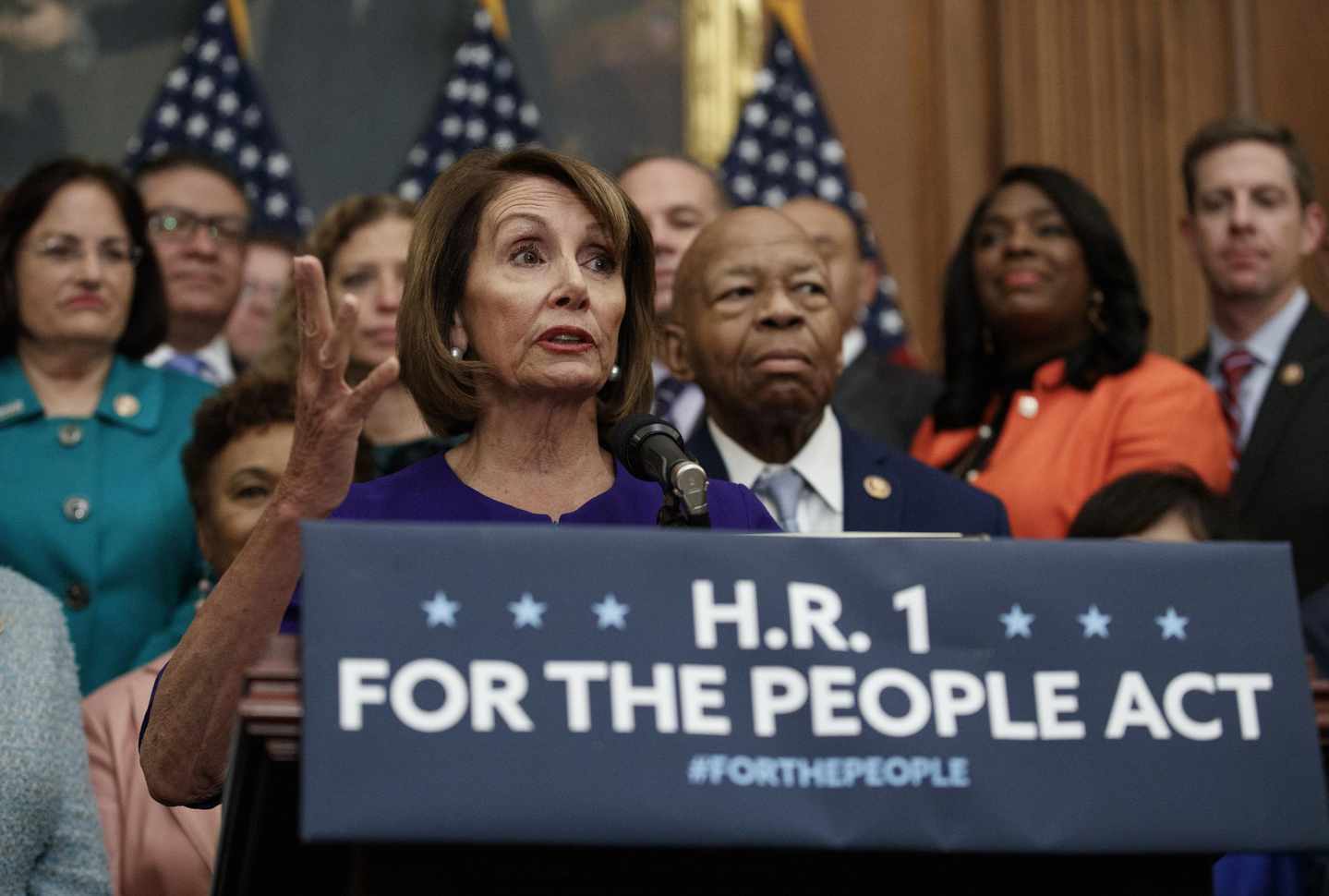
Apologies for no post yesterday, I usually write these posts the night before they come out, and you can see how that schedule could’ve come into trouble given the events of January 6th. Either way, I mentioned I wanted to write about Democratic policy proposals, and I will do that here. More specifically, I want to quickly go through the package first released in 2019 to encapsulate Congressional Democratic leadership’s primary goals. H.R. 1.

For the People

https://assets.realclear.com/images/46/468706_6_.jpg

Over the last seven Presidential election cycles, the Democratic Party has had the support of the plurality of the American people for six of the Presidential elections, despite this, by the end of the 117th Congress, both parties will have had total control of the federal government for about six years each. Some of this, to be sure, is Democrats’ own fault, with the exception of 2006 and 2018, they’ve been pretty bad at getting their base to show up in midterm elections, and due to the staggered nature of Senate elections that’s just part of the game you need to play if you want to really get power in a more lasting way. A lot of it, though, is structural. The electoral college doesn’t explicitly hurt Democrats, it helped Obama in both of his elections and it came very close to letting John Kerry unseat George W. Bush without winning the popular vote, but the two times it has actually decided elections, in 2000 and 2016, it has given the country Republican Presidents despite it wanting Democratic ones. The House is another thing that doesn’t clearly discriminate, but the disastrous 2010 midterm performance for Democrats allowed the GOP to gerrymander in many states, allowing them to take home a House majority in 2012 without winning the most votes (a cycle that is likely to continue into the 2020s because of how blue states tend to just not gerrymander at the federal level while red states are more than happy to). Finally, there is the Senate. The increasing density polarization of America means that a system like the Senate that gives rural voices just so much more power than urban ones means that the median state to take Senate control looks more like Georgia than it does Michigan, the a state much closer to the national will. The deck is stacked against federal Democrats, and that means that the few times that they win, they need to act on small-d democratic reforms and fast.

Enter H.R. 1: The For the People Act. It creates instant online voter registration, creates some level of campaign finance regulation that tries to stay within the bounds of the Citizens United ruling, creates universal vote by mail nationwide, and requires Presidential candidates to disclose their last 10 years of tax returns. All that aside though, most notably for what I’m trying to talk about here, it creates independent commissions to redraw Congressional districts in a non-partisan way in all 50 states, and it makes the last bit of the previous statement incorrect by committing Congress to adding a 51st state, Washington DC. Both of these things would be a boon to Democrats, and I urge them to prioritize them over anything else, because while it’s nice to have total power now, in two years that will almost certainly be gone, and these two things make it much easier to win power back. Non-partisan redistricting means that, with some exceptions that will be because of geographic quirks instead of deliberate partisan hijacking, the party that receives more votes in a state will have more representatives from that state. And while DC statehood does not make the Senate suddenly an even playing field for Democrats, it becomes something they can reasonably do with a pretty good election cycle instead of needing one landslide and one pretty good election cycle to even get to 50, two free Democratic Senators in perpetuity would be great for them, and if the GOP doesn’t like that, they can feel free to to test out what kind of Republican can genuinely make a dent in winning over black voters and maybe apply some of those lessons learned to more competitive races in the south, the playing field is still tilted in their favor. These things could also clearly never pass through budget reconciliation though, so there would either need to be 10 Republican votes on it in the Senate (plausible for gerrymandering reform, DC statehood would be doomed). Or, Democrats can get rid of the filibuster, a topic that will definitely come up over the coming two years and that I will write more about in future, but suffice it to say that I am in favor of this, and if we need to bribe Joe Manchin with a free yacht for every resident of the state of West Virginia, Democrats should try to make it work, with the understanding that Congressional Democrats being able to win power in any other point in this coming decade (they of course just went through 10 years without total control of Congress, so this isn’t out of the question) until major realignments come might be dependent on this. For more on this general topic, there was a great interview with Democratic strategist David Shor back in the summer about how much the deck is stacked against Democrats if they don’t act on this sort of thing, and I’m sure I will be writing more about it in the future, this was just to try to give a small taster.

Tomorrow: We meet a new Senator, one that I have a particular soft spot for.

Loeffler and Perdue Lost, but Warnock and Ossoff Also Won

Last night, Raphael Warnock and Jon Ossoff defeated Kelly Loeffler and David Perdue in runoff elections to the US Senate from Georgia. Media coverage about this will focus about what the Republicans did wrong, after all, Trump is still the President, but what the Democrats did right is as big a part of the story here. I especially want to look at Jon Ossoff here, because not every Democratic Senate candidate gets to have “reverend at MLK’s church” as a part of their resume, Ossoff had never held elected office before, but he held his own against the better of the two Republican candidates. He owes a lot of his playbook to one Barack Obama. Obviously Jon Ossoff is not black or in possession of a Harvard Law degree, but he uses a lot of the rhetorical flourishes that Obama used. The combination of high minded messaging about belief in American ideals, but also an ability to be pragmatic and laser-focused on basic economic issues when need be. The moment the Democrats had the opportunity to frame themselves as the $2000 check party and the GOP as the people who opposed that, it was Ossoff who got right on that. He made sure to focus all of his negative advertising against Perdue painting him as an out of touch rich guy, not on accusations of Perdue not being moral enough in the style of the Hillary Clinton campaign against Trump. These three tweets in a row do a nice job of illustrating my point.

https://cdn.discordapp.com/attachments/446853953905229844/796417691266187294/unknown.png

Anyway, Ossoff is an up and comer who gets to be a Senator at age 33 for six years from a newly minted swing state, he clearly has great things ahead of him, and I for one welcome our new Jewish twink overlords.

I should also mention that the polls in this election were spot on, so hopefully that should assuage some “the same polls that thought Hillary would win” type responses from people come 2022.

Tomorrow: A look at the sorts of policy Democrats have in mind for their new trifecta.